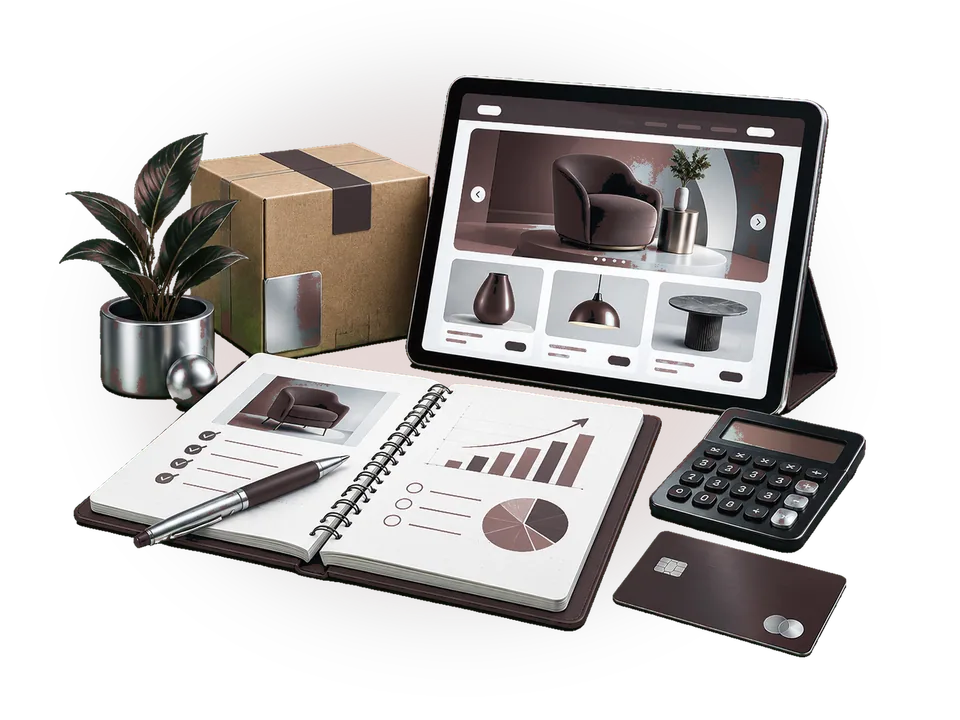
Not every product business needs customers to pay online immediately. A producer, specialist retailer or trade supplier may need to confirm quantities, delivery or customisation first. Choosing between a product catalogue and a full ecommerce website starts with the way your business actually accepts and fulfils orders.
Look at how a sale is agreed
Write down the steps from a customer finding a product to your team accepting the order. If the price, configuration and delivery can be determined reliably during the visit, an online checkout may fit. If those details require consultation, a structured quotation journey may be more appropriate.
Consider different parts of the range separately. Standard items may be straightforward to purchase while custom products require discussion. You do not have to force both into an identical process. During ecommerce website planning, identify which products can support a complete transaction and which need an informed enquiry.
Understand what a catalogue must do
A catalogue website still needs detailed product information, clear images and useful navigation. Removing checkout does not remove the need to help people compare. Include specifications, available options and the information your team needs for a quote. The customer should understand what they are asking for before submitting.
Make the enquiry carry the selected product and relevant choices automatically where the implementation allows. Asking people to copy a title into a general contact form creates unnecessary work and can lose important details. For multiple-item requests, decide how customers will assemble a list that staff can interpret without repeated clarification.
Understand the responsibilities of checkout
A payable store requires dependable prices, delivery rules and operational follow-through. Someone must maintain the catalogue and respond to order issues. Think about unavailable items, incorrect addresses and requests to change an order. These are normal commercial situations that need a defined process, not only a working payment button.
Before choosing checkout, confirm who owns those tasks. A small producer with variable stock may need a different arrangement from a retailer holding a stable inventory. The right solution depends on the reliability of the information available when a customer orders. Avoid offering instant certainty where the business still needs to confirm essential details.
Compare the customer effort
An enquiry model can be useful for complex purchases, but it should not create unnecessary delays for simple products. Conversely, forcing a customer through checkout when the final specification remains unknown can lead to confusion. Consider what information the buyer can reasonably provide without speaking to your team.
Use examples from actual enquiries to design the form. A corporate buyer may know quantity and deadline but need help choosing materials. Link to the relevant quotation conversation at that point. The website should gather enough context to move the sale forward, not require the customer to solve every technical question alone.
Plan a sensible first version
Choose the approach your team can operate accurately from launch. A well-organised catalogue can later support checkout when product data and fulfilment rules are ready. Equally, a store can retain quotation routes for selected ranges. Discuss that future direction so the initial structure does not create avoidable rework.
Review success through the quality of customer interactions and the ability to fulfil the promised process. Are enquiries specific enough to quote? Can buyers complete ordinary purchases without help? These questions provide a more useful basis for improvement than assuming that every product website must have the same commercial model.
Put the advice into practice
Explore our business website design or send us your project brief.
For the next steps, read What Should a Guesthouse Website in Paarl Include?, How Should a Local Business Website Explain Its Service Areas?, What Photos Does a Small Business Website Need?.